History Script: A Modern Calligraphic Font for Designers
There’s a certain magic in a font that feels both timeless and immediate, one that carries the weight of tradition while speaking a contemporary language. History Script is precisely that kind of typeface. It’s an exquisite handwritten font, masterfully designed to become a true favorite for anyone who values elegance and versatility in their visual projects. With its graceful, flowing letterforms, it maintains its classy calligraphic influences while feeling thoroughly fresh and relevant. This isn’t just a script font; it’s a design asset with a personality that can elevate a brand, a piece of packaging, or a social media post from ordinary to unforgettable.
The Visual Character: More Than Just Swashes
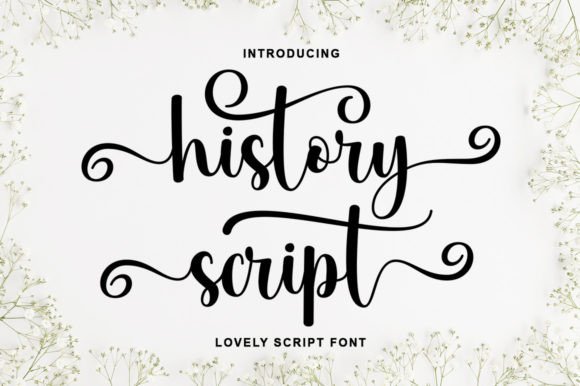
At first glance, History Script impresses with its fluid strokes and natural, handwritten rhythm. The connections between letters feel organic, mimicking the subtle variations of a skilled penman’s hand. This gives it an authentic, human touch that purely digital fonts often lack. Yet, it’s designed with a modern sensibility—the x-height is generous for a script, ensuring it doesn’t become lost or overly delicate when set at smaller sizes. The contrast between thick and thin strokes is pronounced enough to create visual interest and a sense of movement, but controlled to prevent it from becoming fussy or illegible. It’s this balance that makes it a powerful display font for headlines and logos, while still being functional for shorter blocks of text in the right context.
What truly sets a premium font like this apart are the details. History Script is PUA encoded, which is a practical game-changer. This means every stylistic alternate, every elegant ligature, and every special glyph is easily accessible through your standard design software. You don’t need to be a typography expert to unlock its full potential. Want a different flourish on a capital ‘S’ or a unique connection between a ‘t’ and an ‘h’? They’re all there, waiting to be explored. This level of customization allows you to fine-tune the font’s personality to perfectly match your project’s tone, whether it’s romantic and luxurious, or bold and artistic.
Where This Typeface Truly Shines: Practical Applications
Understanding a font’s visual appeal is one thing; knowing where to apply it is where the real value lies. History Script’s versatility is one of its strongest assets. It’s not a one-trick pony destined only for wedding invitations. Let’s break down some real-world scenarios where this script font can deliver significant impact.
- Brand Identity & Logo Design: For businesses in the boutique, artisanal, or lifestyle spaces—a coffee roaster, a florist, a bespoke tailor, a skincare line—History Script can form the cornerstone of a memorable logo. It instantly communicates craftsmanship, care, and a personal touch. Pair it with a clean sans serif font for body text to create a dynamic and professional font pairing.
- Packaging & Product Labels: On a shelf crowded with minimalist, geometric typefaces, a product featuring a beautiful script stands out. Use it for the brand name on a candle, a jar of artisanal jam, or a bottle of wine to evoke a sense of tradition and quality. Its readability at medium sizes makes it suitable for key product information.
- Digital Presence & Social Media: In the fast-scrolling world of Instagram and Pinterest, a striking social media graphic is everything. History Script is perfect for creating quote graphics, promotional sale announcements, or story headers that feel personal and engaging. It adds a layer of authenticity that resonates with audiences tired of sterile corporate aesthetics. For web design, it can be used strategically for hero section headlines or special feature callouts, though always test its performance on mobile screens.
- Print & Editorial Design: Think beyond the obvious. This creative font is stunning on event posters for music festivals or gallery openings, in editorial design for magazine feature headers, or on the cover of a boutique cookbook. In print materials like business cards or letterheads, it can add a sophisticated, personal signature to your correspondence.
- Merchandise & Digital Products: From tote bags and t-shirts to planner stickers and digital planner covers, History Script can transform everyday items into coveted pieces. For entrepreneurs selling on Etsy or their own Shopify store, using this font on product mockups and listings can significantly enhance perceived value and brand cohesion.
Integrating History Script into Your Workflow: A Practical Guide
Falling in love with a font is easy. Using it effectively requires a bit of strategy. Here’s how to ensure History Script works for you, not against you.
1. Define the Role First. Before you even install it, ask: what job is this font doing? Is it the hero of the show (logo, main headline)? Or is it a supporting actor (a pull quote, a special accent)? Its role will dictate the size, weight, and level of ornamentation you use. For a primary logo, you might leverage the most elaborate swashes. For a website headline, you might opt for a simpler, more legible set of characters.
2. Master the Pairing. No script font is an island. The key to professional presentation is pairing it with a complementary typeface. A classic approach is to combine it with a neutral, geometric sans serif font like Montserrat or Lato for body copy. This creates a clear hierarchy and ensures your message remains readable. For a different feel, pairing it with a sturdy serif font like a slab serif can create a more traditional, grounded aesthetic. Always test pairings at the actual size they’ll be used.
3. Prioritize Readability, Always. This is non-negotiable. While History Script is designed with care, any script font can become difficult to read if used improperly. Avoid setting long paragraphs in it. Use it for short, impactful phrases. Ensure there is sufficient contrast between the text color and the background. On websites, be mindful of how it renders across different browsers and devices. A beautiful font that no one can read fails its primary purpose.
4. Explore the Glyphs. Don’t just type and go. Dive into the OpenType features. In Adobe Illustrator or Photoshop, use the Glyphs panel to explore the full library of alternates and ligatures. Substituting a standard ‘a’ for a stylistic one can completely change the word’s character. This exploration is what allows you to create truly unique and customized typography, moving beyond the default and making the design yours.
5. Mind the Licensing. As a commercial font, History Script comes with a license that dictates how you can use it. Typically, a standard license covers a specific number of users or devices for a single business. If you’re a designer creating logos for multiple clients, you may need an extended license. Always read the End User License Agreement (EULA) carefully to ensure your use—whether for a client’s website, merchandise, or software—is fully covered. This protects both you and the font creator.
A Final Thought on Typography and Connection
Ultimately, typography is about communication and feeling. The fonts you choose are silent ambassadors for your message. History Script, with its blend of classic elegance and modern clarity, offers a powerful way to inject warmth, personality, and a human touch into your projects. It’s a tool for telling a story—a story of quality, creativity, and attention to detail. By using it thoughtfully and strategically, you can create visual experiences that don’t just capture attention, but also build a genuine connection with your audience.